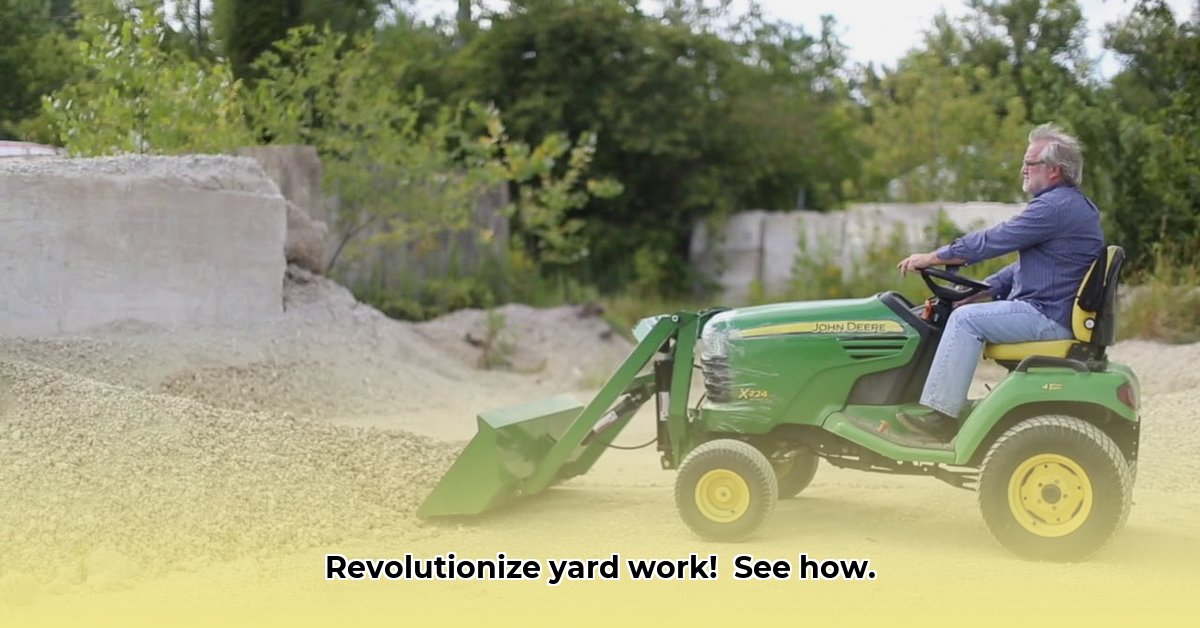
Lawn Tractor with Bucket: Your Ticket to Effortless Yard Work
Tired of backbreaking yard work? A lawn tractor with a bucket attachment can transform your outdoor chores. This guide provides a step-by-step approach to selecting, using, and maintaining this versatile tool, turning hours of grueling work into minutes of efficient effort. For more on front-end loaders, check out this helpful resource: Front-end loaders.
Choosing the Right Lawn Tractor and Bucket Combination
Selecting the ideal lawn tractor and bucket requires careful consideration of several factors. First, assess your property's size. A small yard requires a compact tractor with a smaller bucket, while larger properties benefit from a more powerful machine with a larger capacity (measured in cubic feet).
Next, consider your planned tasks. Moving heavy topsoil necessitates a robust tractor with a significant lifting capacity (measured in pounds), whereas simply clearing debris requires less power. Budget is another crucial factor; lawn tractors range widely in price. Finally, thoroughly examine online reviews to identify potential issues or unexpected advantages before making a purchase. Don't forget to check fuel efficiency – a key factor affecting long-term running costs.
Attaching the Bucket: A Step-by-Step Guide for Success
Always consult your owner's manual before proceeding. Generic instructions may not perfectly suit your model. While the steps below provide general guidance, manufacturer-specific details hold precedence.
Safety First: Engage the Parking Brake: This critical step ensures the tractor remains completely immobile during attachment installation.
Lower the Hydraulics: Fully lower the tractor's lift arms for safe access, preventing accidental activation.
Precise Alignment: Carefully align the bucket's mounting points with the tractor's lift arms. Meticulous positioning is essential for a secure connection.
Secure Hydraulic Connections: Connect the hydraulic lines firmly. Ensure that connections are secure but not overly tight to prevent damage.
Testing the Connection: Slowly raise the lift arms to verify the secure connection and proper hydraulic functioning. If any issues are encountered, immediately stop and recheck.
Final Inspection: Conduct a thorough pre-operation check, confirming all parts are properly secured and no hazards exist.
Unleashing the Versatility of Your Lawn Tractor with Bucket
The applications of a lawn tractor with a bucket extend far beyond simple dirt moving. Many homeowners have found it invaluable for tasks such as hauling firewood, spreading mulch, leveling ground for projects, and even snow removal (with appropriate snow-clearing attachments, sold separately).
To ensure peak performance, regular maintenance is crucial. Thoroughly clean the bucket after each use to prevent corrosion and buildup. Lubricate moving parts as recommended in your owner's manual; this helps to prolong the lifespan of your equipment. Address any fluid level issues promptly.
Prioritizing Safety: Essential Tips for Safe Operation
Operating power equipment demands stringent safety measures. Here's how to mitigate risks.
Eye and Foot Protection: Always use safety glasses and sturdy, closed-toe footwear.
Situational Awareness: Maintain complete awareness of your surroundings, avoiding obstacles and keeping a safe distance from others. Children and pets must be kept far from the operating area.
Terrain Considerations: Avoid operating the tractor on uneven or unstable ground.
Load Limits: Never exceed the bucket's weight capacity to prevent damage and accidents.
Operational Limits: Understand your tractor's capabilities and avoid pushing it beyond its design limits.
Regular Inspections: Conduct routine inspections for signs of wear, damage, or malfunction.
Comparing Models: Key Features to Consider
The table below compares three hypothetical models. Individual specifications vary greatly between manufacturers and models; use this only as a general illustration.
| Feature | Model X | Model Y | Model Z |
|---|---|---|---|
| Engine Horsepower | 18 | 22 | 28 |
| Lifting Capacity | 600 lbs | 850 lbs | 1200 lbs |
| Bucket Capacity | 12 cu ft | 18 cu ft | 24 cu ft |
| Approximate Price | $3,500 | $4,500 | $6,000 |
Remember to consult manufacturer specifications for precise details. Reviewing multiple models and brands is always strongly recommended.
Long-Term Costs: Beyond the Initial Investment
While the initial cost can be substantial, a lawn tractor with a bucket offers long-term savings in time and physical effort. However, account for ongoing expenses such as fuel, maintenance, repairs, and storage. Proper maintenance is key to maximizing the equipment’s lifespan and return on investment.
Is a Lawn Tractor with a Bucket Right for You?
Consider your specific needs, property size, budget, and expected tasks. For efficient and versatile yard management, a lawn tractor with a bucket represents a worthwhile investment. Weigh all factors carefully before making your decision.
How to Compare Tractor Attachments for Small Property Maintenance
Key Takeaways:
- Tractor and attachment selection depends on property size and needs. Compact tractors with versatile attachments are ideal for smaller properties.
- Consider lift capacity and bucket size; larger buckets mean fewer trips but can be cumbersome in tight spaces.
- Safety is paramount; always follow manufacturer instructions and wear safety gear.
- Regular maintenance extends equipment life and saves money.
- Compare prices and features from different brands; read reviews and consult with other users.
Selecting the Right Tractor for Your Needs
Property size, terrain, and budget are key considerations. Compact tractors suit smaller yards, while larger properties need more powerful models. Research features like fuel efficiency for long-term cost savings.
Understanding Bucket Attachments: Size Matters
Bucket size significantly impacts efficiency and maneuverability. A smaller bucket is advantageous in tight spaces, while a larger bucket enables moving more material with fewer trips. The optimal size depends on your property and the scale of your projects.
| Feature | Small Bucket | Medium Bucket | Large Bucket |
|---|---|---|---|
| Capacity | Lower | Moderate | High |
| Maneuverability | High | Moderate | Low |
| Ideal for | Tight spaces, small properties | Moderate-sized properties | Large properties, bulk material |
Attaching the Bucket: A Step-by-Step Guide
- Engage the PTO (Power Take-Off): Activates the hydraulic system.
- Connect Hydraulic Lines: Securely attach lines from tractor to bucket.
- Align Mounting Hardware: Align bucket’s mounting points with tractor's hitch.
- Secure the Attachment: Use pins or bolts for firm attachment.
- Test the Lift: Raise and lower the bucket to confirm proper operation.
Comparing Other Attachments: Beyond the Bucket
Explore options like tillers for garden preparation or snow blowers for winter maintenance. Choose attachments that enhance your yard work efficiency based on specific needs.
Safety First: Essential Precautions
Always read the instruction manual. Wear appropriate safety gear—eye protection, gloves, and sturdy shoes. Never operate while tired or under the influence of substances. Keep children and pets away.
Maintenance and Longevity
Regular maintenance, including fluid checks, lubrication, and damage inspections, is vital for prolonging equipment life and cost savings.